Solution · Customer support · chat, email, messengers

Routine customer questions answered automatically, day and night

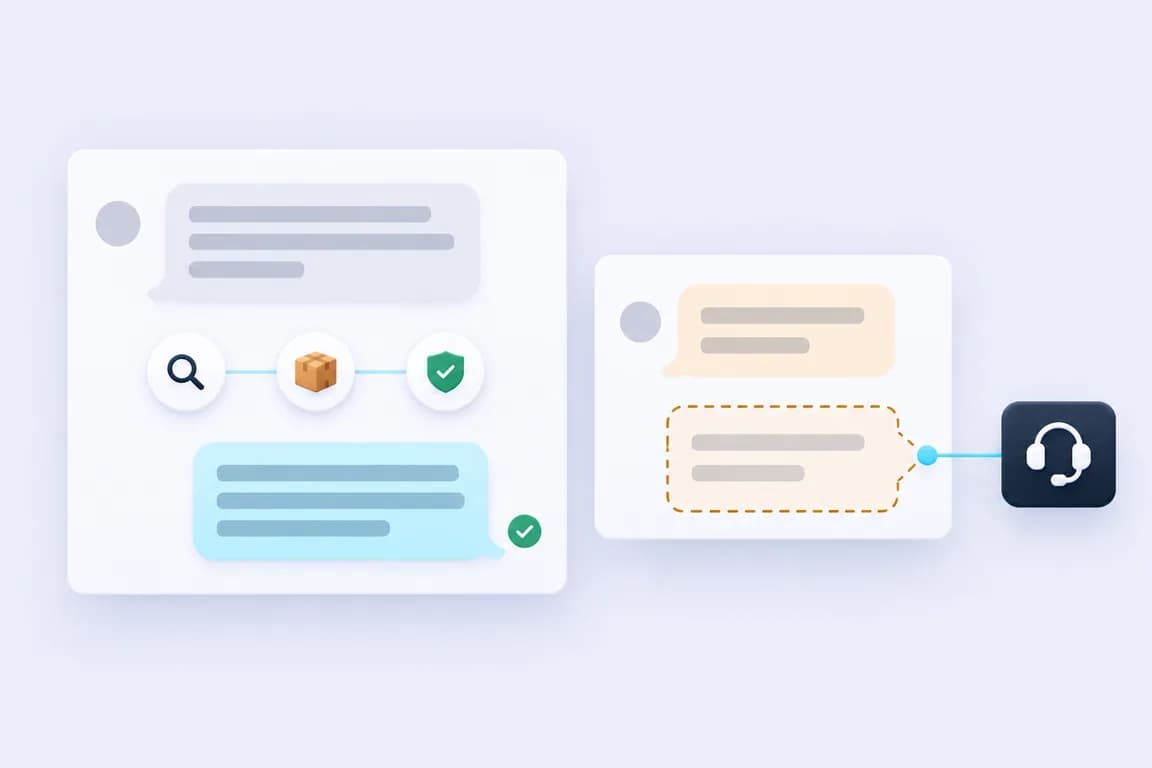
We build this system to order for companies whose operators answer the same questions every day. AI reads each message, understands what the customer wants, weighs whether your knowledge base and the order data hold the answer, and chooses: answer, draft for an operator, or hand over. Ordinary software finds the order, checks your support rules and opens returns. Payment problems, complaints and requests for a person go to an operator at once

Who works with it

Support operator

Answers customers in chat, email and messengers

Gets only the conversations that need a person, each with its history, the order and a short brief, and AI’s draft where there is one

Head of support

Runs the support team

Sets what AI may answer, the refund it may give and which topics always go to a person. Sees every conversation and its route

Customer

Writes about an order, a delivery or a product

Gets an answer about an order, a return or a product day and night, and can always ask for a person

What comes in

What the system reads for each message, and where the answer goes

Chat, messengerscustomer messagesEmailcustomer lettersOrder systemorders, deliveriesCRMcustomer historyKnowledge baseanswers, policiesThe support deskanswers and routesAnswers and ticketsto the customer and the CRMAIAIAIChat, messengerscustomer messagesEmailcustomer lettersOrder systemorders, deliveriesCRMcustomer historyKnowledge baseanswers, policiesThe support deskanswers and routesAnswers and ticketsto the customer and the CRMAIAIAI
Three ways out

The path of one message

Customer messagechat, email, messenger
AIThe support deskrules and AI
  1. Answered by AIstatus, returns, known questions
  2. Operator confirmsa refund, or AI unsurea person decides
  3. Operator at oncepayments, complaintsa person decides
Example messages

Pick a message and see what happens to it

Made-up messages to an online store. Its rules and limits stand for the ones your head of support would set

Pick an example message
  1. Iryna · Chat

    The blender arrived with a cracked jug, photo attached. I want my money back.

  2. AIUnderstood: a refund for a blender that arrived damaged
  3. RuleLooked up in the order system: a blender, $89, delivered yesterday
  4. RuleReturn window: Day 1 of 30
  5. RuleRefund AI may give: Up to $50. Above that, an operator approves
  6. Draft, waiting for an operator

    I’m sorry the blender arrived damaged. We will refund $89 to your card, and a courier will collect the blender. An operator will confirm the refund shortly

  7. To an operator, with the conversation

    Brief: Blender, $89, arrived with a cracked jug (photo in the chat). Refund to the card and a courier pickup drafted

Where the message goes AIOperator confirms

A rule needs an operator’s yes, so AI’s answer waits as a draft. The operator confirms it, changes it or answers

a person decides

Software, AI and a person

Who does which part of the work

Software and AI go through every message. An operator gets the conversations that need a person

Rule

Ordinary software

Monotonous work with clear rules

  • Takes every message from chat, email and messengers into one queue
  • Finds the customer in the CRM and the order in the order system
  • Checks the support rules: the return window, what can be returned, the refund AI may give
  • Opens returns and tickets, and hands a conversation to an operator with its history
  • Logs every message and answer in the CRM
AI

AI: understand, weigh and choose

The small decisions on every message

  • Reads each message and understands what the customer wants, in their own words
  • Answers from your knowledge base and the order data, and says when they hold no answer
  • Writes the answer in the customer’s language
  • Notices when a customer is upset or asks for a person
  • Chooses whether to answer, draft for an operator or hand over at once
a person decides

A person

Every exception and every upset customer

  • The operator takes payment problems, complaints and requests for a person
  • The operator confirms refunds above the limit
  • The operator answers what the knowledge base does not cover
  • A customer can always ask for a person
  • The head of support sets the rules and what AI may answer
How a project starts

Four stages. After each one, you decide whether to go on

First on past conversations, then on one channel

  1. Usually firstDiscovery and specification
    In
    The questions customers ask most, your channels, your knowledge base and your support rules
    You get
    A written specification: which questions come first, what data the system needs, what it will cost and in what order. The document is yours whether or not we build it
  2. ThenTest on past conversations
    In
    Last month’s conversations, with the answers your operators gave
    You get
    What AI would have answered and where it would have sent each conversation, next to what your operators did
  3. ThenPilot on one channel
    In
    One channel or one kind of question you choose, such as order status in chat
    You get
    AI answers there. An operator reads every answer while the rules are being set
  4. When you decideRollout
    In
    The channels and questions you choose
    You get
    AI answers what your data and rules cover, and operators get the rest. Your team changes the rules
Six questions we ask first
  1. How many customer messages do you get a month? We plan the system and the pilot around it
  2. How long does an operator spend on one message? The pilot is measured against it
  3. How many operators answer customers? We plan who gets the conversations that need a person
  4. Which channels do customers use: chat, email, messengers, phone? The pilot starts with one of them
  5. Do you have a knowledge base or written answers to common questions? AI answers only from it and from your order data
  6. Which CRM or ticket system do you use? The pilot connects to it, and every conversation is logged there
In our cases

A part of this we have built for a client

Not a support desk: the same split, AI talks with people and rules check access, running for a client today

Tell us which questions your operators answer every day

A 30-minute call. We will say which of them your data and knowledge base can answer and where a project would start