Solution · Retail · stock and supplier orders

Supplier orders worked out automatically every day, before a product runs out

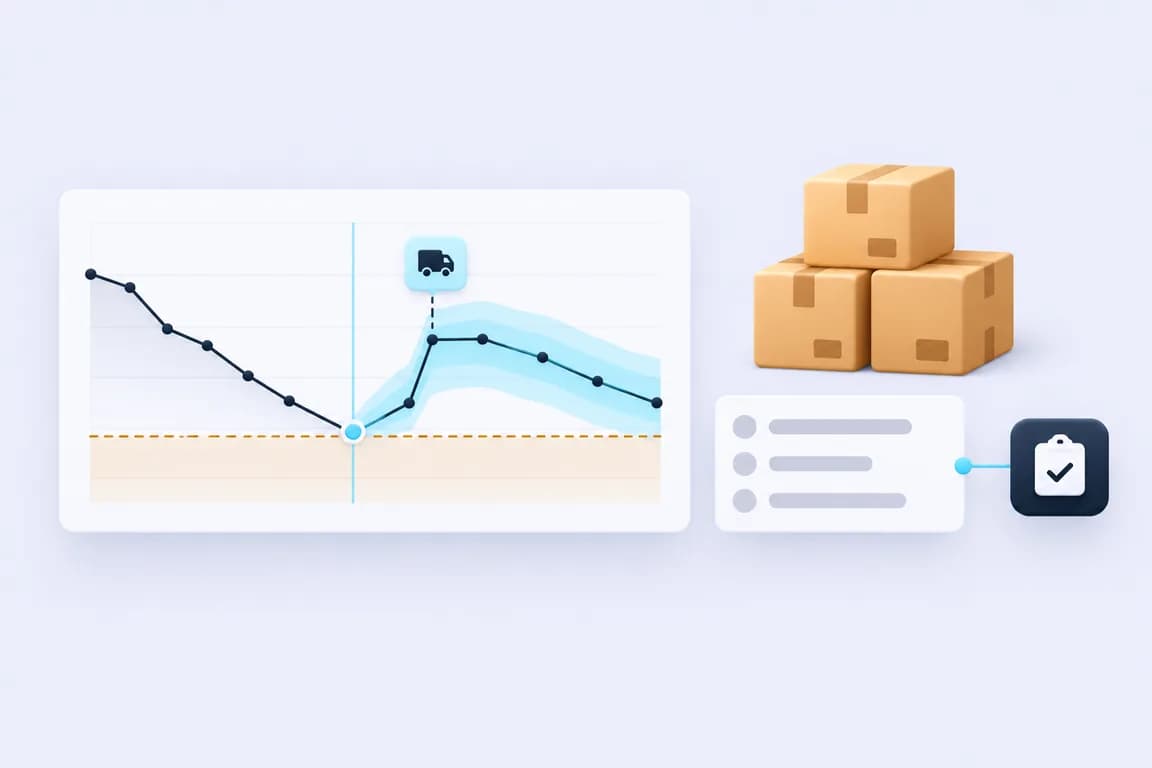
We build this system to order for retail chains and distributors. Ordinary software tracks stock and deliveries and works out each order by your rules, and AI reads sales, the season and your promotions, weighs them and forecasts demand for each product as a range. Orders within your approval limit go to suppliers by themselves, and the buyer gets the rest

Who works with it

Buyer

Orders a group of products from suppliers

Gets the orders over the approval limit, the products AI is unsure of and the supplier minimums that do not fit, and approves, changes or holds them

Head of purchasing

Runs purchasing and the suppliers

Sets the safety stock, the approval limit and which suppliers get orders by themselves. Sees every order and the forecast behind it

Warehouse manager

Runs the warehouse

Sees what arrives and when, a week ahead, and plans the space and the people to receive it

What comes in

What the system reads every day, and what it sends

Cash registersevery receiptWarehousestock, deliveriesERPsuppliers, pricesPromotionsthe calendarPurchasingopen ordersThe daily reviewforecasts and ordersSupplier ordersand tasks for the buyerAIAICash registersevery receiptWarehousestock, deliveriesERPsuppliers, pricesPromotionsthe calendarPurchasingopen ordersThe daily reviewforecasts and ordersSupplier ordersand tasks for the buyerAIAI
Three ways out

The path of one order

A product, every daysales, stock, deliveries
AIThe order reviewrules and AI
  1. Sent to the supplierwithin your limit, or none needed
  2. Buyera big order, or AI unsurea person decides
  3. Held for a personthe minimum is far over the needa person decides
Example products

Pick a product and see its stock and the order it gets

Made-up products of a chain’s warehouse. The approval limit, the safety stock and the supplier terms stand for the ones a company would set

Pick an example product

School notebooks, four weeks before school starts

Stock, four weeks back and the days this order covers AI
TodayOrder arrivesSafety stockruns out without an order
The order, by your rules Rule
Forecast for the next 24 days AI
528 (432–624)
+ Safety stock
120
− In stock and on the way
240
= Needed
408
Order, in packs of 50
450 · $1,575
What AI weighed AI
  • MoreSchool starts in four weeks
  • MoreLast year sales tripled in the three weeks before school
  • MoreStock fell faster each week this month

AI’s reading: demand will keep rising until school starts

Where the order goes AITo the buyer

The order is over your approval limit, so the buyer sees the forecast behind it and approves, changes or holds it

Rule Approval limit: $1,500. This order: $1,575

a person decides

Software, AI and a person

Who does which part of the work

Software and AI go through every product every day. A person gets the orders that need one

Rule

Ordinary software

Monotonous work with clear rules

  • Tracks stock, sales and deliveries on the way, by product and warehouse, every day
  • Works out each order from the forecast, the safety stock and what is on the way
  • Rounds each order up to the supplier’s pack and minimum order
  • Sends orders within the approval limit to the supplier, and the rest to the buyer
  • Logs every order with the forecast behind it
AI

AI: understand, weigh and choose

The small decisions on every product

  • Forecasts demand for each product from sales, the season, holidays and your promotions
  • Gives the forecast as a range, wider when sales are harder to read
  • Reads why sales jumped or fell, and says when it cannot tell
  • Spots products that sell slower than their stock suggests
  • Chooses whether an order can go out by itself or needs the buyer
a person decides

A person

Every big order and every exception

  • The buyer approves each order over the limit
  • The buyer decides on sales AI cannot explain
  • A person decides when a supplier’s minimum is far over the need
  • The buyer negotiates with suppliers, as before
  • The head of purchasing sets the safety stock and the limit
How a project starts

Four stages. After each one, you decide whether to go on

First on past sales, then on one category

  1. Usually firstDiscovery and specification
    In
    Your assortment, your suppliers and how orders are placed today
    You get
    A written specification: which categories come first, what data the system needs, what it will cost and in what order. The document is yours whether or not we build it
  2. ThenTest on past sales
    In
    Past sales, stock and orders by product
    You get
    The orders the system would have placed, next to the orders you placed and where stock ran out or piled up
  3. ThenPilot on one category
    In
    One category or one warehouse you choose
    You get
    A draft order for each product. The buyer approves each one while the rules are being set
  4. When you decideRollout
    In
    The categories and warehouses you choose
    You get
    Orders within the limit go to suppliers by themselves, and the rest go to the buyer. Your team changes the rules
Six questions we ask first
  1. How many products do you stock, and in how many warehouses or stores? We plan the system and the pilot around it
  2. How are orders placed today: by hand, at a reorder point, from a spreadsheet? The test on past sales compares the system’s orders with it
  3. How often do products run out, and do you know which ones? The test looks at those products first
  4. Do you keep sales and stock history by product? The forecast is built from it
  5. Do you know each supplier’s lead time and minimum order? The rules work each order out with them
  6. Which ERP and warehouse system do you use? The pilot connects to them
In our cases

A part of this we have built for a client

No forecast there: the part that sends orders to a supplier and tracks them, running for a client today

Tell us how orders are placed today

A 30-minute call. We will say what your sales and stock data allow and where a project would start