Excel files corrupted
Numbers changed inside files nobody had opened. At that size, Excel was no longer a safe place to keep orders.
B2B Shades makes roller shades in New Jersey and sells them wholesale. Orders were typed into a folder of Excel files, one person at a time. Only the owner knew which clutch, tube and motor each shade needs. We built a web application with an entry screen laid out like the client’s original spreadsheet, for convenience. It validates and prices every line as it is typed and stops an invalid order before production. Two people enter orders, one checks them, and the owner does neither

The owner had a background in software. He saw what his Excel files had become only when he stepped back and looked at them whole
Files nobody had even touched, yet the numbers inside somehow changed on their own. I felt like this was the end.Paul · CEO, B2B Shades
Numbers changed inside files nobody had opened. At that size, Excel was no longer a safe place to keep orders.
Widths, clutches, tubes, motors, deductions: only the owner knew what each shade needs. Every order that needed that knowledge depended on him.
Only one person could enter orders at once. Every line was typed by hand, and a typo could reach production.
He sat down after the shift to finish what the day had not allowed him to finish.
An ERP for window coverings from PIC Business Systems. It is sold module by module, with card processing and inventory each a separate purchase, and then a sales rep is assigned to the customer. The setup was quoted at $40–60K, and the client found its data-entry screens painful to work in.
The plant used it for a while. It is made for every kind of window treatment, from curtains and drapery to tracks and blinds, and does not follow how this plant makes its shades.
Years to integrate, and paid customization for every change. The plant would also be tied to the vendor: at current volume, going back to Excel was no longer possible.
I need freedom and customization. I don’t want to be locked into their logic, their limits, and their vision. None of them has ever built a real roller shade.Paul · CEO, B2B Shades
The system decides what reaches the cutting table, so it was designed where the orders are entered
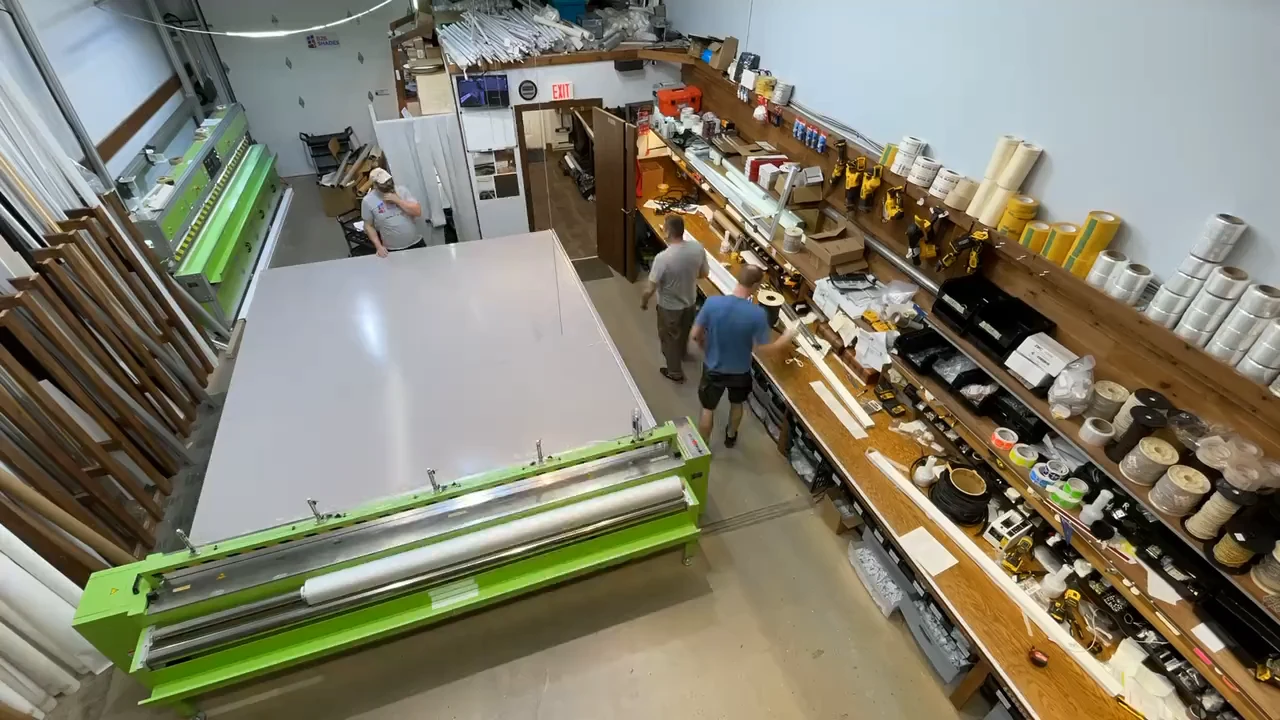
The software decides what goes into production, so Vitalii drove to the plant to watch how orders were entered and how the owner wanted to work with the system.
The owner and the operators sketched the screens with us on site. The grid kept the spreadsheet’s columns, so they recognized it on the first day and needed no training.
Less time to enter an order. No invalid order reaches production. Every feature was checked against these two.
Orders moved from Excel files into a database. The screen keeps the spreadsheet’s columns, so the operators did not have to relearn their work. Behind it, each line is validated against the production rules and priced as it is typed
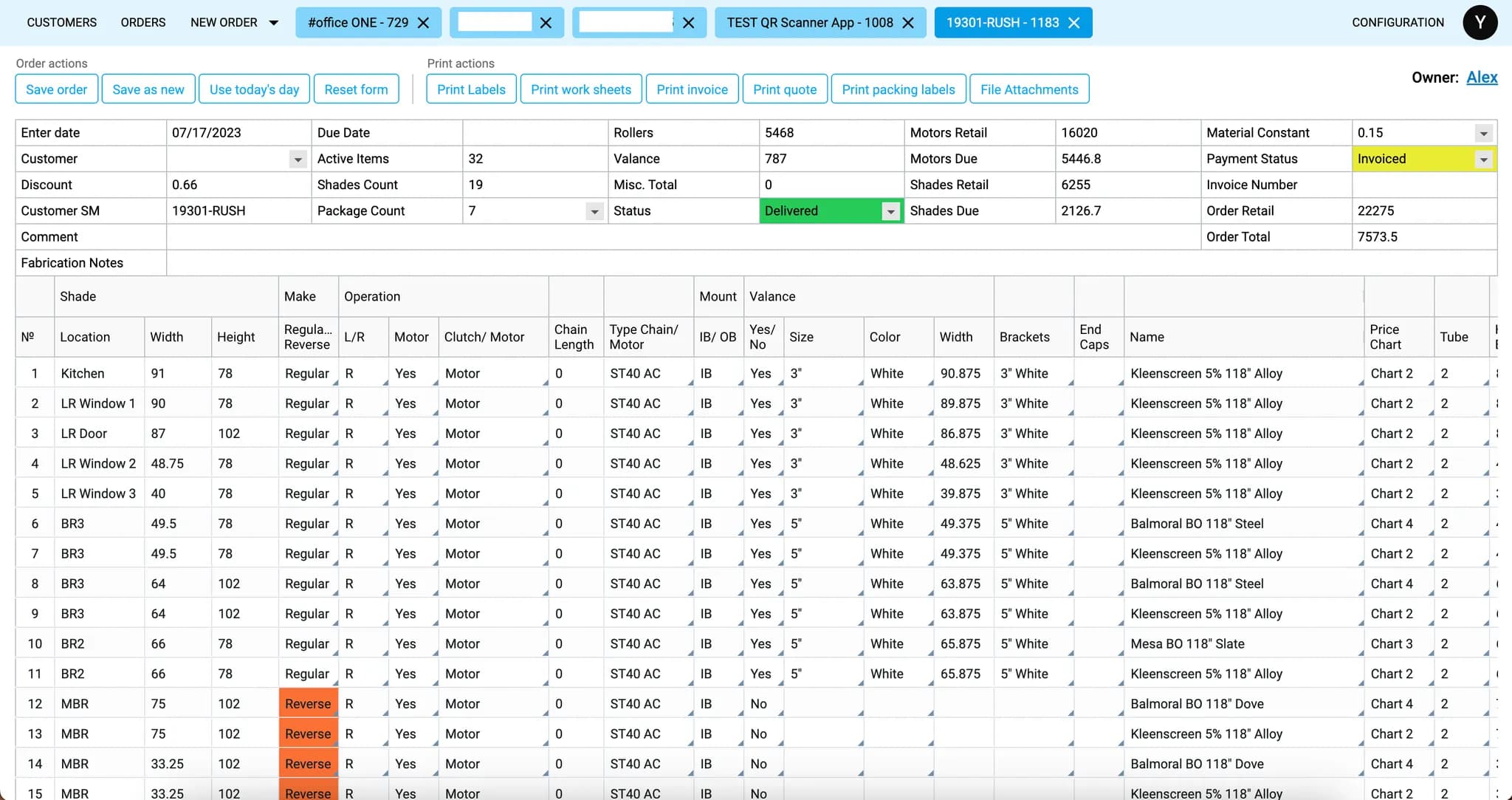
The same columns the operators used in Excel. Each line is validated against the production rules and priced as it is typed, and the order total updates with it
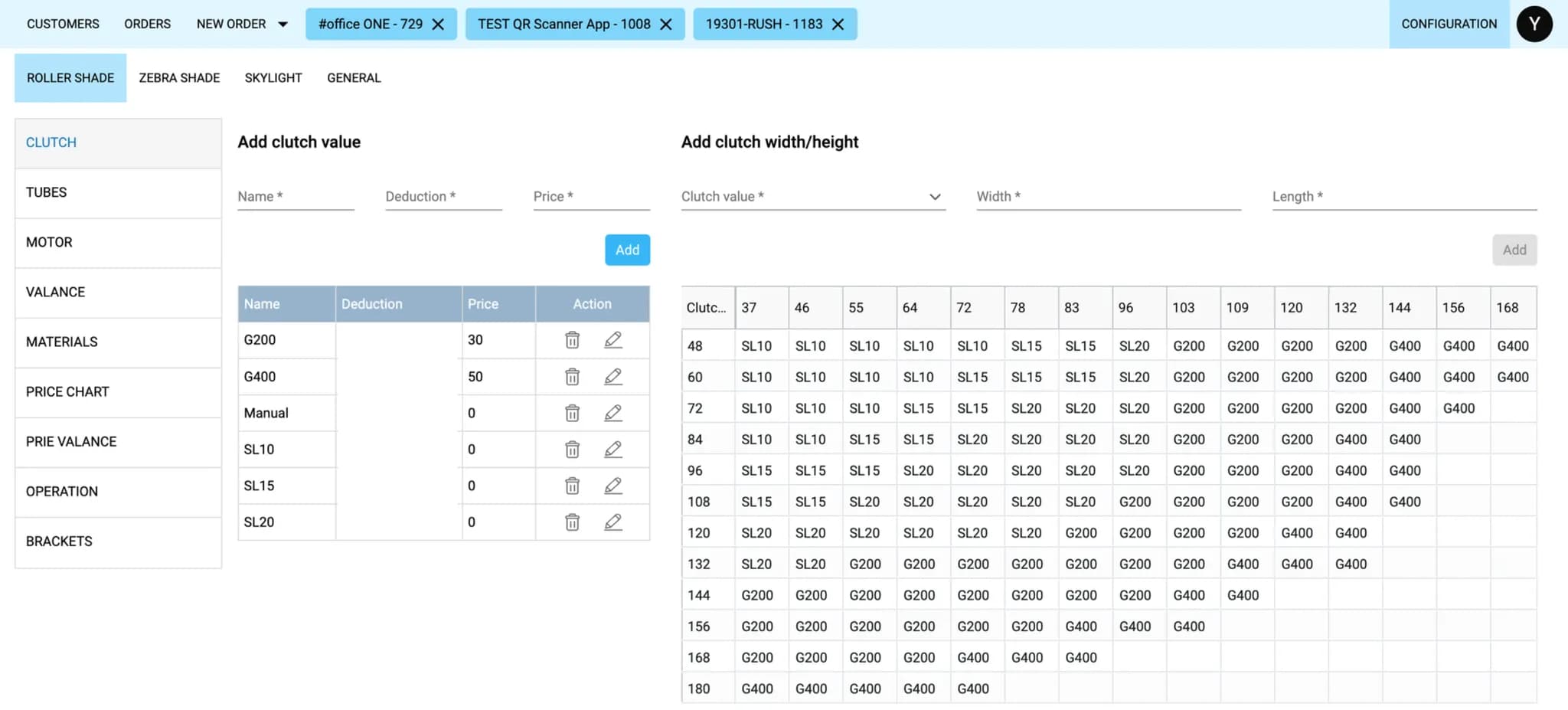
Clutch prices and the width × height chart the system uses to pick the clutch for each shade. The owner changes these himself, and every order line is validated against them
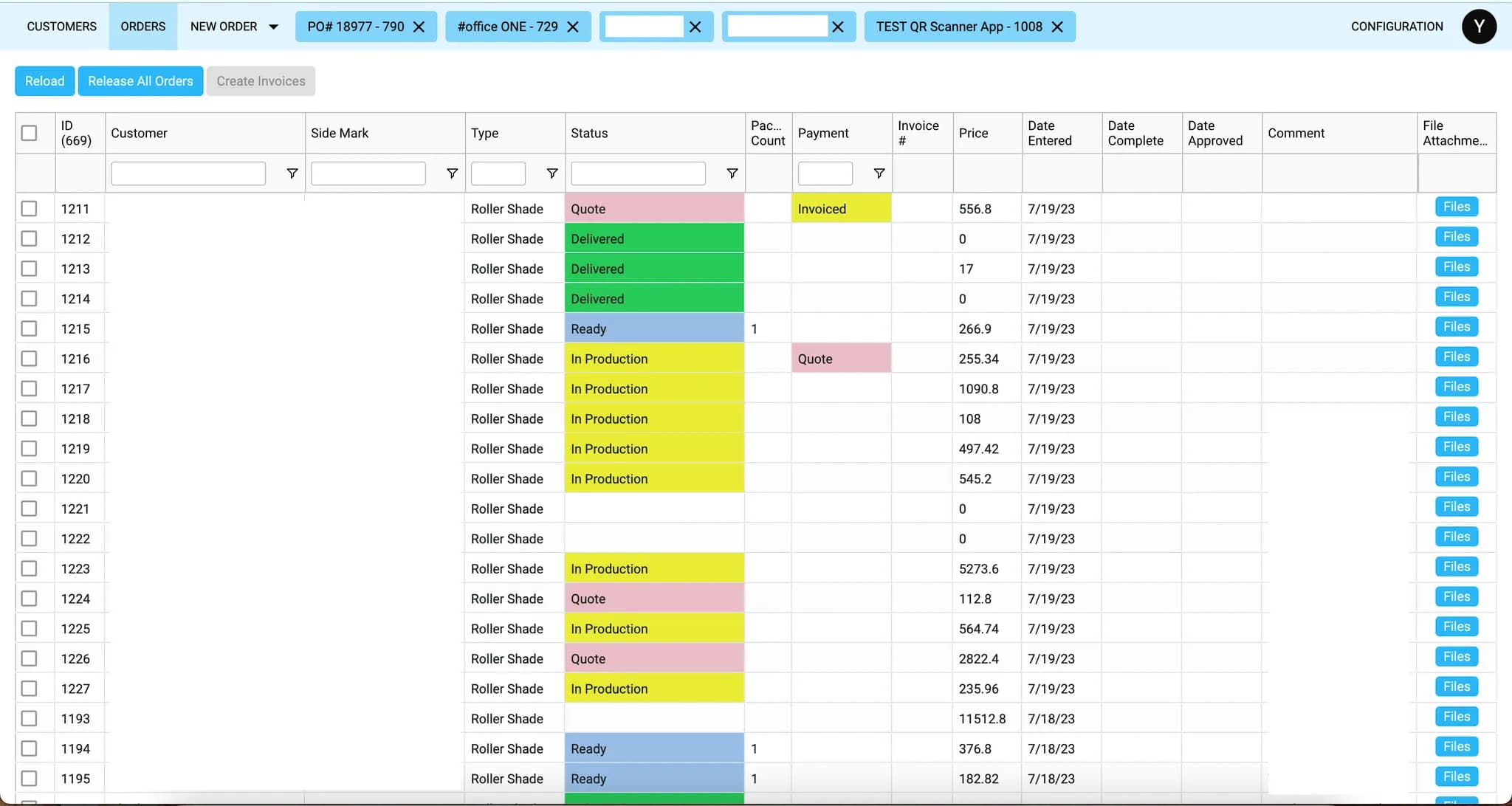
Every order with its status (quote, in production, ready, delivered), its invoice and its attachments, filterable. It replaced the folder of files and the paper cabinet
Even the first rough version boosted productivity by 30%. Now, what used to be our best month in 2023 is just an average month.Paul · CEO, B2B Shades
No, I’m not home any earlier, but the workload has shifted — I’m less of a hands-on operator and more of an owner who runs things.Paul · CEO, B2B Shades
Since the first version, the order screen has been rebuilt so a new product line goes live in about 2 weeks instead of 2–3 months. The plant went from five product lines to nine, and a second installation of the system runs in another state
In 2025 a second, separate installation went live in another state, with its own application, database and deployment. In 2023 the owner said he wanted software other fabricators could use. This is the first copy of the system that runs outside the plant it was built for.
In the first system each product had its own order form, pricing code and tables, and a new line took two to three months to put into production. In 2025–2026 we rebuilt it. A product is now described as a list of fields, dependencies, validation rules and price formulas, and one shared order screen shows every product described this way. Shangri-La and Roman shades went live in 2026 after about two weeks of work for the pair. A fix to one rule or price formula now reaches every line on that screen at once.
Roller shades, Zebra shades, skylights, parts orders and drapery tracks were joined by ZipScreen, Zebra V2, Shangri-La and Roman shades. Three of the four went live in 2026.
The first case study published a roadmap. Here it is again, with what happened to each line
Every goal we set has been nailed. Now we’re onto the next level: inventory, dashboards, analytics, reports.Paul · CEO, B2B Shades · 2023 interview
What were your business goals before you decided to roll out a new system?
Basically, automate and speed things up. We didn’t have a real database. We had a folder full of Excel files and a file cabinet with paper copies. That was all. Then broken Excel files started showing up — files nobody had even touched, yet the numbers inside somehow changed on their own. I felt like this was the end. I was sitting there building an Excel file and suddenly realized I wasn’t building a spreadsheet anymore, but a full-blown application inside Excel.
When did you realize you needed custom software instead of heavily customizing PIC ERP or BlindMatrix?
A few key factors. My shade-making process has its own quirks — widths, clutches, tubes, motors, deductions. Standard systems either don’t support that, or require insane customization, or you wait years for updates. Vendor lock-in: if things go south with them, I lose the system and production. And cost — with PIC ERP it’s $40–60K for the setup. My friend spent a year migrating from another system, then paid for every custom tweak.
What’s changed from launch till now? How’s your day, your role, your workload?
The software is still pretty rough, but it does the job. It catches mistakes, stores orders in a structured way, and lets us pull up old orders fast. We’ve ramped up production volume, and yet only two people enter orders, one person checks, and that’s not me. I now spend half as much time on the production routine. No, I’m not home any earlier, but the workload has shifted — I’m less of a hands-on operator and more of an owner who runs things.
What’s the future of this software as a product?
Ultimately, I see it as a vertically integrated solution for fabricators. When we build a turnkey solution and demo it on the live B2B Shades example, we’ll get customers.
Vitalii is one of the best front-end freelancers that I have worked with. He is always at the top of my list when I need some help with projects. Very knowledgeable, friendly and easy to work with. Very happy, as always.
Honestly the best dev that I use here at Upwork. He is without a doubt my favorite and preferred programmer. His work is clean, logical and on time. Beyond that he usually identifies missing needs and features in projects that I had not considered, which is massively helpful.
Absolutely impressed with his abilities and work ethic. As a programmer myself, I needed to outsource some workload for a personal side project. I found that Vitalii was knowledgeable and very good at what he does. Also he speaks/writes fluent English, which was super helpful. I certainly will be using Vitalii again on future projects. He has earned my trust. He was actually the 2nd person I hired for this job. The first one could not complete this task as needed (even though they had a compelling resume).
Anyway, I can't say enough good things about my experience with Vitalii. If you are looking for someone who can actually do what they say they can, is easy to work with and completes projects on time, I recommend him fully.
Wow, wow, wow. Vitalii was the best freelancer I have used. So dedicated, so detailed and never, never gave me a hard time even when he was right to do so. A real friend and superb coder, professional. I can't recommend him highly enough!
He is always great to work with and always goes the extra mile. Always happy with his work and communication.
Amazing work as always!
A 30-minute call about your order entry, free. If it is worth going further, the next step is a paid discovery: a written specification of what to build and what it costs, yours whether or not we build it
Zen Software builds back-office and manufacturing systems for small and mid-size producers in the U.S. Founder Vitalii Buga brings over a decade of software engineering and management experience running back-office projects for cloud providers in the U.S.